

Not because they lack experience, but because everything still feels possible.
When we meet Tamara Tare backstage at the Old Vic, she is nearing the end of her professional debut in Just For One Day, the Live Aid musical that became one of London’s most talked-about theatrical successes. Fresh from graduating from the Royal Academy of Music, she has found herself sharing a stage with experienced performers, performing to packed houses and navigating the whirlwind transition from drama school to the professional industry.
Yet what stands out most is not excitement, although there is plenty of that. It is curiosity.
Throughout our conversation, Tamara speaks repeatedly about learning. Learning from directors. Learning from fellow performers. Learning from history. Learning from audiences. Even when discussing her own achievements, the focus rarely stays on herself for long. Instead, she returns to the people around her and the opportunities they have created.
In an industry often obsessed with arrival, there is something refreshing about speaking to a performer who remains fascinated by the process of becoming.

When Opportunity Arrives Unexpectedly
Like many performers, Tamara imagined her first professional job would arrive after months of careful planning and strategic career decisions.
Reality had other ideas.
Having graduated from the Royal Academy of Music in 2023, she spent several months auditioning and attempting to establish herself within the industry. When a promising opportunity failed to materialise, she decided to take a holiday with her mother and temporarily switch off from the relentless cycle of auditions.
Then her agent got in touch. “I told him don’t send me anything before I come home and before I even got on the plane he sent this one through.”
The audition would eventually take place in a Dubai hotel room, with her mother sitting quietly in the dark while she filmed a self-tape. Within weeks, she was speaking to director Luke Sheppard and casting director Stuart Burt. Shortly afterwards, she was in rehearsals.
Looking back, the speed of it all still surprises her. “It was really speedy. I was really surprised how fast the process was.”
There is a tendency within theatre to focus on breakthrough moments as though they happen overnight. Listening to Tamara, however, reveals the reality behind many apparent overnight successes: years of training, countless auditions and a willingness to say yes when opportunities finally appear.

The Importance Of A Collaborative Room
One of the people Tamara credits most enthusiastically is director Luke Sheppard.
While audiences see the finished production, she remains fascinated by the environment in which it was created. Again and again, she returns to the collaborative nature of the rehearsal process and the sense that everyone involved was encouraged to contribute. “One thing about the show is that it has everyone’s fingerprints on every single part of the production.”
For a performer making her professional debut, that level of trust proved transformative. The cast members may have been playing fictionalised versions of people connected to the Live Aid story, but many of the details were drawn directly from the performers themselves. Character names, personalities and even specific moments emerged through conversations and improvisation.
Tamara’s own character, Alicia, was named by Tamara herself. The process reinforced an important lesson: theatre is rarely the work of a single individual. The most successful productions are often those that allow multiple perspectives to coexist. It is a lesson she clearly intends to carry forward.
Throughout the interview, she speaks less about individual achievements and more about the collective experience of creating something together. Even now, months after opening night, she talks about the production as though it belongs equally to everyone involved.

Learning From The People Around You
If there is one phrase that appears repeatedly throughout our conversation, it is “I’ve learned.” For Tamara, entering a professional cast immediately after drama school became an education in itself.
Surrounded by experienced performers, many with extensive West End credits, she approached the experience with the mindset of a student rather than someone eager to prove herself. “I’ve learned so much from just watching everyone in the cast.”
Whether discussing vocal preparation, script analysis or performance technique, she speaks with genuine admiration for the artists around her. Rather than seeing experience as intimidating, she views it as an opportunity.
The names she mentions are not dropped as credentials but as examples of people she has observed closely. “You just take what you can get because everyone’s amazing and has fantastic resumes and great experiences.” It is a perspective that feels increasingly rare in an industry often driven by comparison.
Instead of worrying about measuring up, Tamara appears focused on absorbing knowledge wherever she can find it. That willingness to remain teachable may prove one of her greatest strengths.

Discovering Your Place In The Story
One of the more interesting aspects of our conversation centres on identity and representation. Although Just For One Day tells a story rooted in 1985, Tamara is particularly interested in how contemporary audiences engage with it. Part of that connection came through her work covering Mara, a British aid worker whose perspective helped her understand the humanitarian crisis that inspired Band Aid and Live Aid.
Prior to joining the production, Tamara admits she knew relatively little about the historical events at its centre. “I actually didn’t know about Live Aid before I did this job.” Researching the role changed that.
The process led her towards a deeper understanding not only of the famine in Ethiopia, but also of the misconceptions that continue to shape conversations about Africa today. “We used to have conversations about how people see Africa as one massive place.” For Tamara, those discussions became one of the most meaningful aspects of the project.
She wanted audiences to leave with more than nostalgic memories and familiar songs. She hoped they would leave with questions, curiosity and a broader understanding of the world beyond their own experiences.
That desire feels particularly significant coming from someone at the beginning of her career. While many performers understandably focus on finding their place within the industry, Tamara is equally interested in what theatre can contribute to wider conversations.
The Joy Of Being Part Of Something Bigger
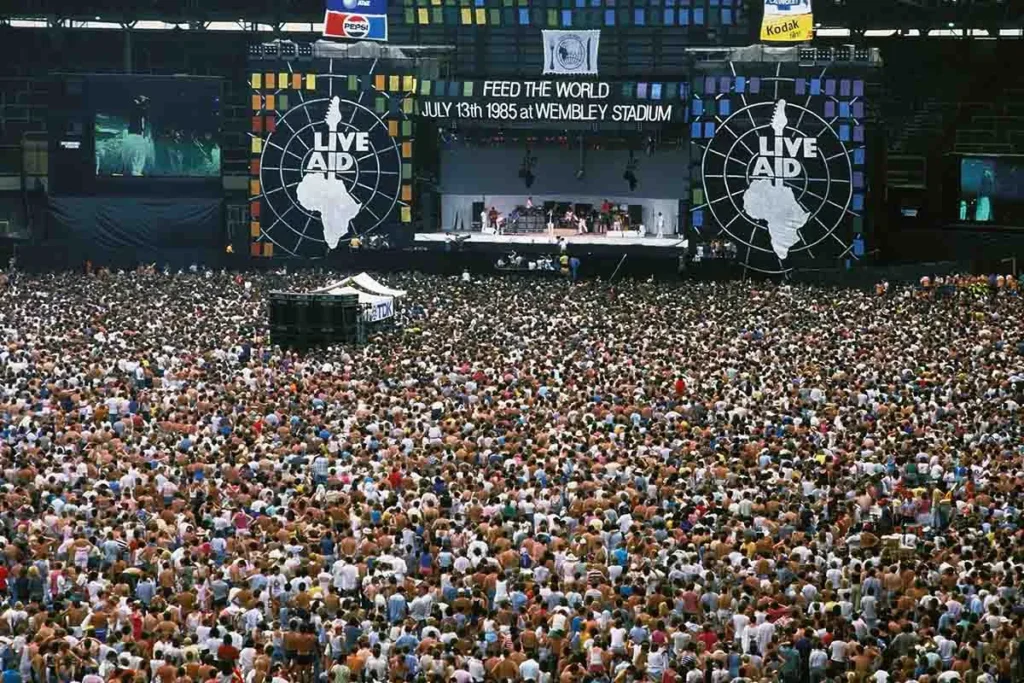
When Tamara describes her favourite moments in the production, she rarely talks about solo performances. Instead, she speaks about ensemble moments. The cast gathered together. The band playing live on stage. The audience responding collectively. “The whole cast on stage, rocking out.” There is a genuine sense of wonder in the way she describes those experiences.
For someone whose first professional steps included working with the Royal Ballet as an actor before moving into musical theatre, being part of a large company remains one of the greatest pleasures of the job.
Her memories of those early experiences at the Royal Opera House are revealing. Although she was often positioned at the edges of the action rather than at the centre, she found herself captivated by the scale of the productions and the collaborative effort required to make them happen.
“It was great for me to get used to being on a big stage.” That sense of perspective remains evident today.
Success, for Tamara, appears less about individual recognition and more about contributing meaningfully to a larger whole.
Staying Open To What Comes Next
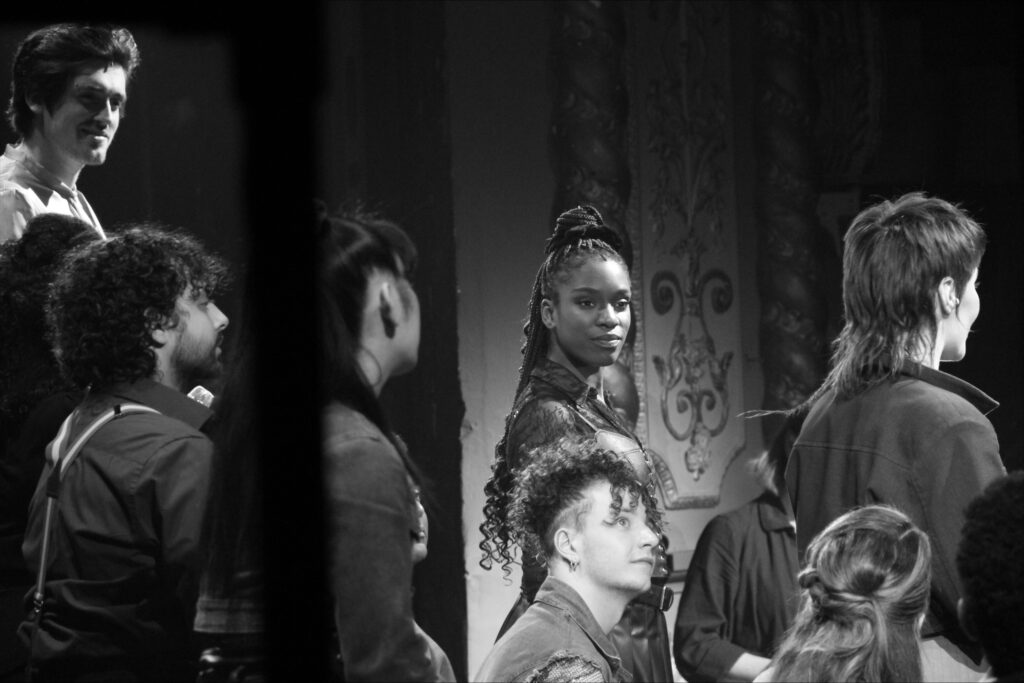
As our conversation draws to a close, it becomes clear that Tamara has no fixed blueprint for where her career should go next. There are ambitions, of course. She laughs when discussing the possibility of joining SIX one day and speaks warmly about the performers whose careers she admires. Yet there is little sense of urgency.
Instead, she seems focused on continuing to grow. Continuing to learn. Continuing to say yes to opportunities that challenge her.
In many ways, that attitude mirrors the journey that brought her here in the first place. A self-tape recorded on holiday led to a professional debut. A graduate suddenly found herself sharing a stage with established performers. A young artist discovered that the industry she hoped to join was also willing to teach her.
Looking back on the conversation, what lingers most is not the story of a particular production but the portrait of a performer embracing uncertainty. There is confidence, certainly, but it is paired with humility. Ambition sits comfortably alongside gratitude.
Perhaps that is why Tamara feels like someone worth watching. Not because she already knows exactly where she is going, but because she remains open to everything she might become.
Based on the Theatre Audience Podcast interview with Tamara Tare. Listen to the episode →