
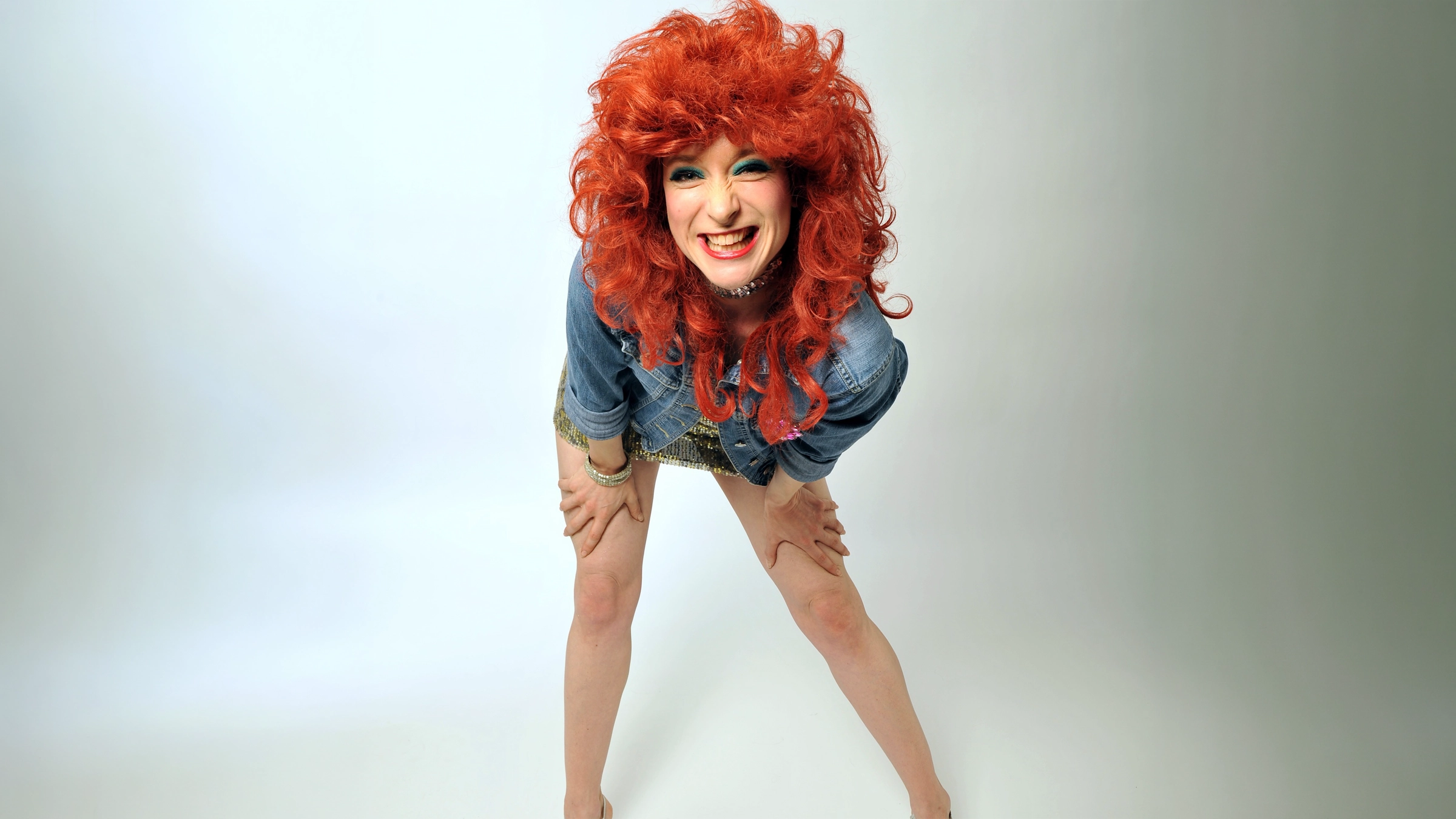
Some performers spend their careers trying to perfect the same show. Sarah-Louise Young seems far more interested in discovering what happens when a show refuses to stay the same.
An Olivier Award-winning performer, writer and cabaret artist, Sarah-Louise has built a reputation for creating work that exists in a unique space between theatre, music, improvisation and audience participation. Her critically acclaimed An Evening Without Kate Bush has become something of a phenomenon, touring internationally, playing festivals, filling theatres and developing a devoted following of audiences eager to embrace its peculiar blend of fandom, celebration and collective joy.
Yet despite the title, the show is not really about Kate Bush. Or at least, not entirely.
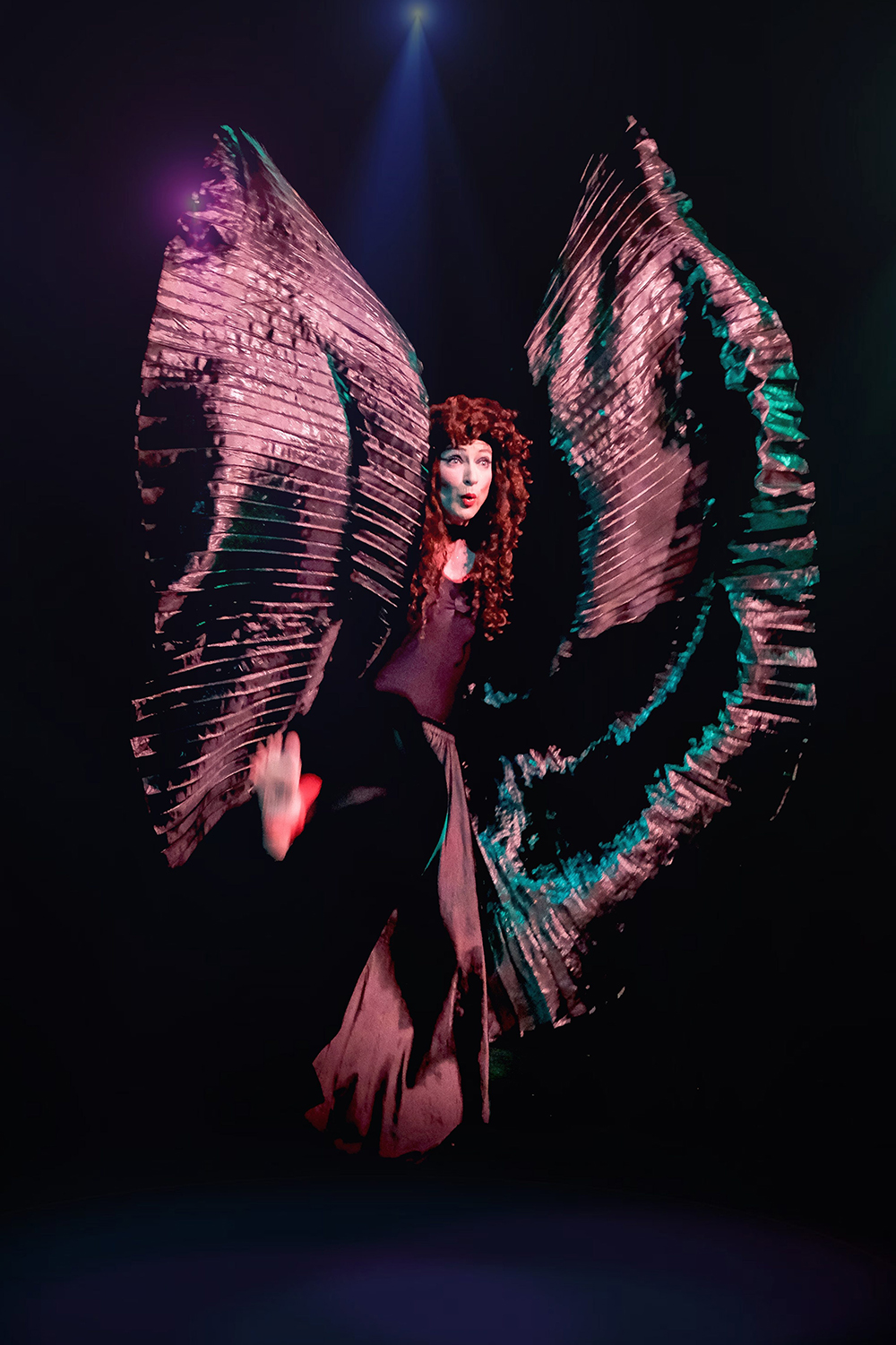
Speaking with Sarah-Louise, it becomes clear that the production is as much about the people who gather to celebrate the music as it is about the artist herself. What began as an expression of personal fandom has evolved into something much broader: an exploration of memory, connection, creativity and the strange ways art embeds itself into our lives.
Throughout our conversation, Sarah-Louise reflects on the relationship between artists and audiences, the importance of making people feel seen, the mysteries of the creative process and why, in an increasingly fragmented world, live performance still matters. Like the show itself, the discussion is funny, thoughtful and occasionally unexpected, moving effortlessly between Kate Bush, creativity, grief, community and the transformative power of shared experience.
More Than A Tribute
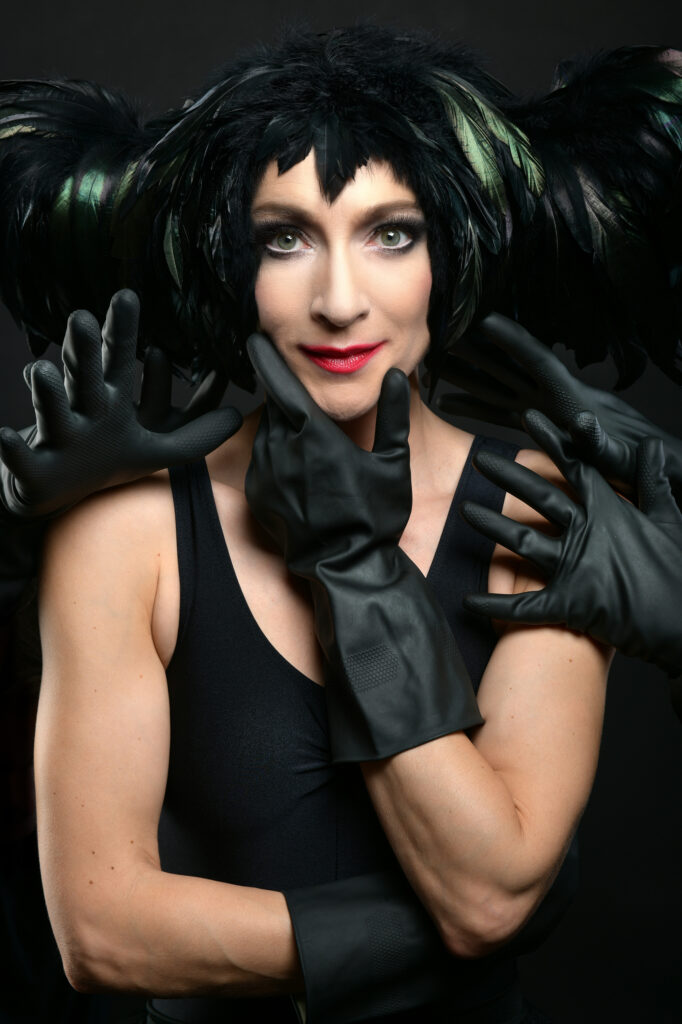
Trying to describe An Evening Without Kate Bush presents a challenge, largely because it refuses to fit neatly into any single category. Sarah-Louise is quick to point out that it is not an impersonation show. Nor is it a conventional tribute concert. Instead, it emerged from a fascination with fandom itself and the unique relationship people form with artists who become part of their lives. “I am a massive Kate Bush fan,” she says. “So Russell Lucas and I, we made the show together. We came from a place of fandom. For us, it’s a huge piece of fan art.”
What interested them was not simply the music but the cultural phenomenon that had grown around it. For more than three decades, Kate Bush continued making art while largely remaining absent from public view. That absence created space for fans to engage with her work in unusual ways. “When you’ve got an artist who’s making work, they’re still putting their art into the world, but they’re not there. The way that we engage with it, the way that we celebrate her work changes.”
That celebration has manifested itself in everything from drag competitions to international Wuthering Heights flash mobs, where hundreds of people dressed in flowing red dresses gather to recreate the iconic dance from the song’s music video.
Sarah-Louise has attended many of these events around the world and speaks about them with genuine affection. What fascinates her is not celebrity culture, but the communal act of celebration. “There’s something so joyful because Kate Bush is probably never going to sing Wuthering Heights again. But there’s a real joy in coming together to celebrate this hugely theatrical song.” That idea sits at the heart of the show. Rather than recreating Kate Bush, Sarah-Louise explores what Kate Bush means to people.
The Audience Is The Show
Throughout our conversation, Sarah-Louise returns repeatedly to one subject: the audience.
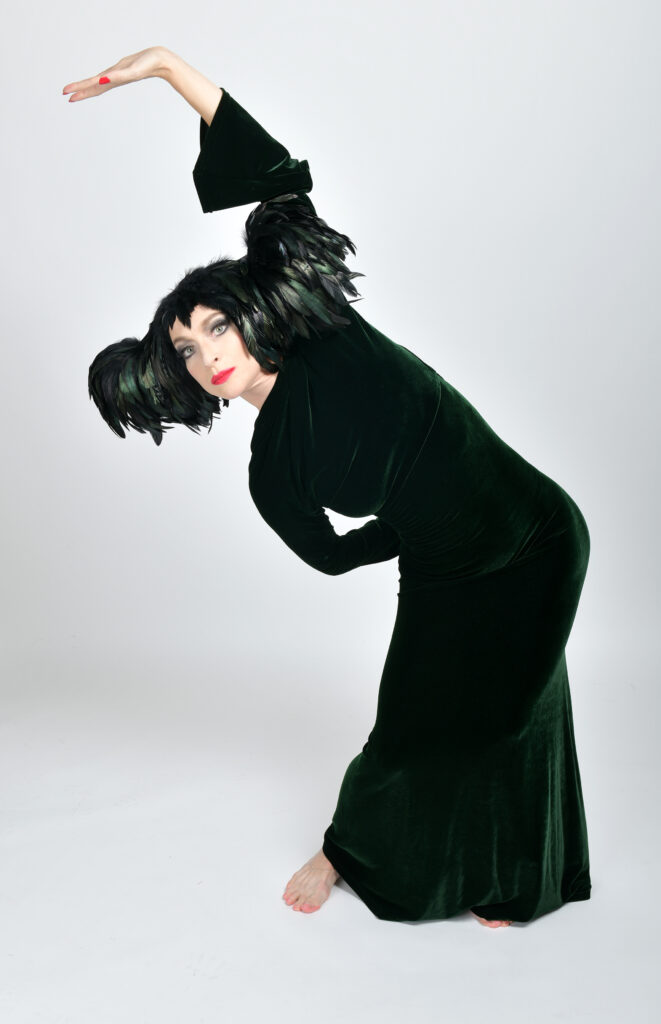
For many performers, the audience is the recipient of a performance. For Sarah-Louise, they are an essential part of creating it. “I only want to do work really that acknowledges that they’re there.”
Her background in cabaret has shaped this philosophy. Unlike traditional theatre, where the fourth wall often remains firmly intact, cabaret thrives on interaction, spontaneity and shared experience. Audiences do not simply observe; they contribute. As a result, no two performances of An Evening Without Kate Bush are exactly alike.
Early in the show, audience members are invited to share their favourite Kate Bush songs and, in some cases, personal stories connected to the music. Those responses then influence the performance itself. “I use answers to that to help thread through the show some kind of connective tissue.” The stories that emerge are often deeply personal. People talk about grief, recovery, relationships and moments that have become forever attached to particular songs. Over time, Sarah-Louise has come to realise that these conversations are every bit as important as the performance itself. “I always do a meet and greet after the show. Sometimes the meet and greet takes longer than the show.”
What matters to her is creating an environment where people feel safe enough to participate. “I feel very passionately about keeping my audience safe.” The distinction is important. Sarah-Louise dislikes the idea of audience members being “picked on” or used as the butt of a joke. Instead, she aims to make people feel valued and included. “I want my audiences to feel elevated and celebrated.” That philosophy has helped create a show that feels less like a performance and more like a gathering.
Why We Need Shared Experiences
The longer we speak, the clearer it becomes that Sarah-Louise’s interest in audience participation is rooted in something larger than entertainment.
She believes people are increasingly hungry for genuine connection. Particularly since the pandemic, she has become more conscious of how valuable shared experiences can be.
“I think especially on this side of the pandemic, that feels even more strong than usual.”
In a world increasingly dominated by algorithms, personalised feeds and individual consumption, live performance offers something fundamentally different. People gather in the same room. They experience something together. They respond collectively. For Sarah-Louise, this communal element has become increasingly important. “Life is short. I want the audience to feel like it was worth them showing up.”
The stories she shares illustrate exactly what she means. One audience member told her he had undergone treatment for throat cancer and had not sung publicly for four years. During the show, surrounded by other audience members, he found himself singing again. “He was in tears and I was in tears.” Moments like that remind her why she continues performing the show. “It’s made the whole thing worthwhile.” The experience reaffirmed something she has always believed: art can create spaces where people feel able to reconnect with parts of themselves they thought they had lost.
Creativity And The Mystery Of Inspiration
As both a performer and writer, Sarah-Louise is fascinated by the creative process itself.
Like many artists, she struggles to explain exactly where ideas come from. The conversation drifts naturally towards inspiration, writing and those elusive moments when solutions appear unexpectedly after periods of frustration. “We’ve both had that experience of the gap between thought when you’re on a walk, you’re doing something else, the washing up, and suddenly this gift of an idea just seems to float into the space.”
Rather than seeing creativity as something that can be forced, she views it as a process of remaining open. The best ideas often arrive when attention is elsewhere. The challenge is recognising them when they appear. Sarah-Louise references the notion that artists do not necessarily own inspiration but act as conduits for it. It is an idea that resonates deeply with her own experience. “If that’s not some kind of something outside of myself that’s just saying, ‘Oh, I’m available for you,’ then I don’t know what it is.”
Her current work on a new show about the painter Bob Ross has prompted similar reflections. While different artists approach creativity in different ways, she believes most recognise the feeling of an idea arriving seemingly from nowhere. There is a humility in that perspective. Rather than positioning the artist as a genius, it positions them as someone willing to listen.
Growing Older, Growing Clearer
One of the most striking aspects of our conversation is Sarah-Louise’s clarity about what matters to her now. After decades working across theatre, cabaret and performance, she no longer seems interested in creating work simply for the sake of creating it.
At fifty, she speaks openly about wanting every project to have purpose. “I only really want to make work that feels valuable and needed and joyful.” That does not mean avoiding complexity. Quite the opposite. She admires Kate Bush precisely because the songwriter consistently explored difficult themes through her work. Love, grief, war, technology, loss and environmental concerns all appear throughout Bush’s catalogue. “She’s always written about big themes.”
Sarah-Louise sees a similar responsibility in her own work. Not necessarily to provide answers, but to create experiences that encourage reflection, connection and conversation. What matters is that audiences leave having felt something meaningful. That belief seems to underpin everything she creates. Not spectacle for spectacle’s sake. Not nostalgia for nostalgia’s sake. But experiences that remind people of their shared humanity.
The Joy Of Not Knowing
After nearly 400 performances, it would be easy to assume that An Evening Without Kate Bush now runs like clockwork. Sarah-Louise laughs at the suggestion. In reality, she still experiences uncertainty every time she steps onto a stage. “I definitely have moments where I’m just about to go on stage thinking, ‘What am I doing?'” Part of the show’s longevity comes from that unpredictability. Because the audience contributes so much to the evening, the experience constantly evolves.
Some nights there are fifty people. Some nights there are eight hundred. Some audiences are packed with devoted fans. Others arrive knowing almost nothing about Kate Bush.
Yet somehow the show continues to find its shape. “I don’t really know what I’m getting myself into until I step out onto the stage.” Rather than viewing that uncertainty as something to fear, Sarah-Louise embraces it. Perhaps that is the secret behind the show’s enduring appeal.
At its heart, An Evening Without Kate Bush is not really about certainty at all. It is about showing up, remaining open and discovering what happens when people gather together around something they love. Whether that love is for Kate Bush, music, storytelling or simply being part of a room full of strangers sharing an experience, the result is the same. A little joy. A little danger. And a reminder that the best live performances are never quite finished. They are created anew every night.
Based on the Theatre Audience Podcast interview with Sarah-Louise Young. Listen to the episode →