
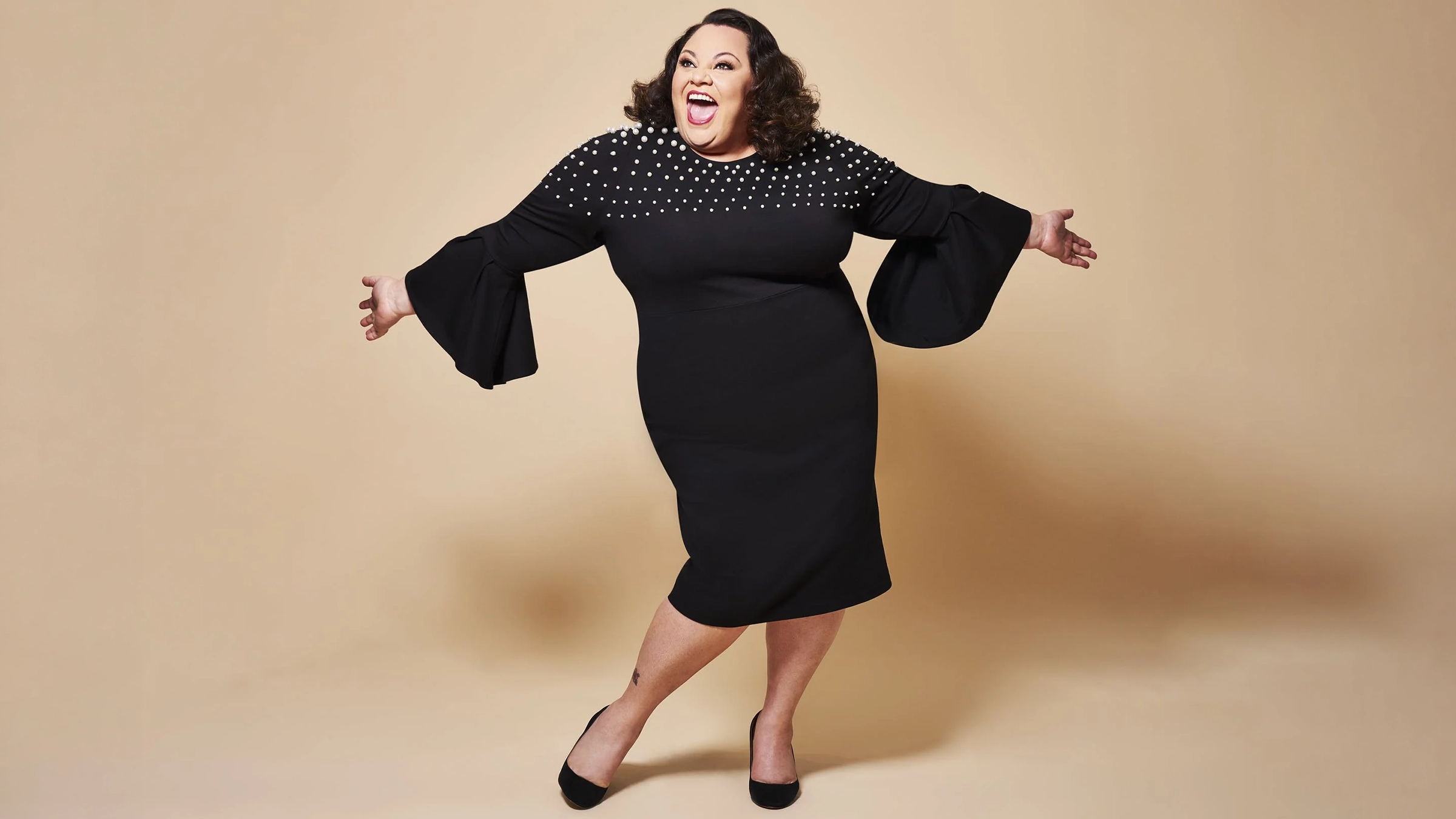
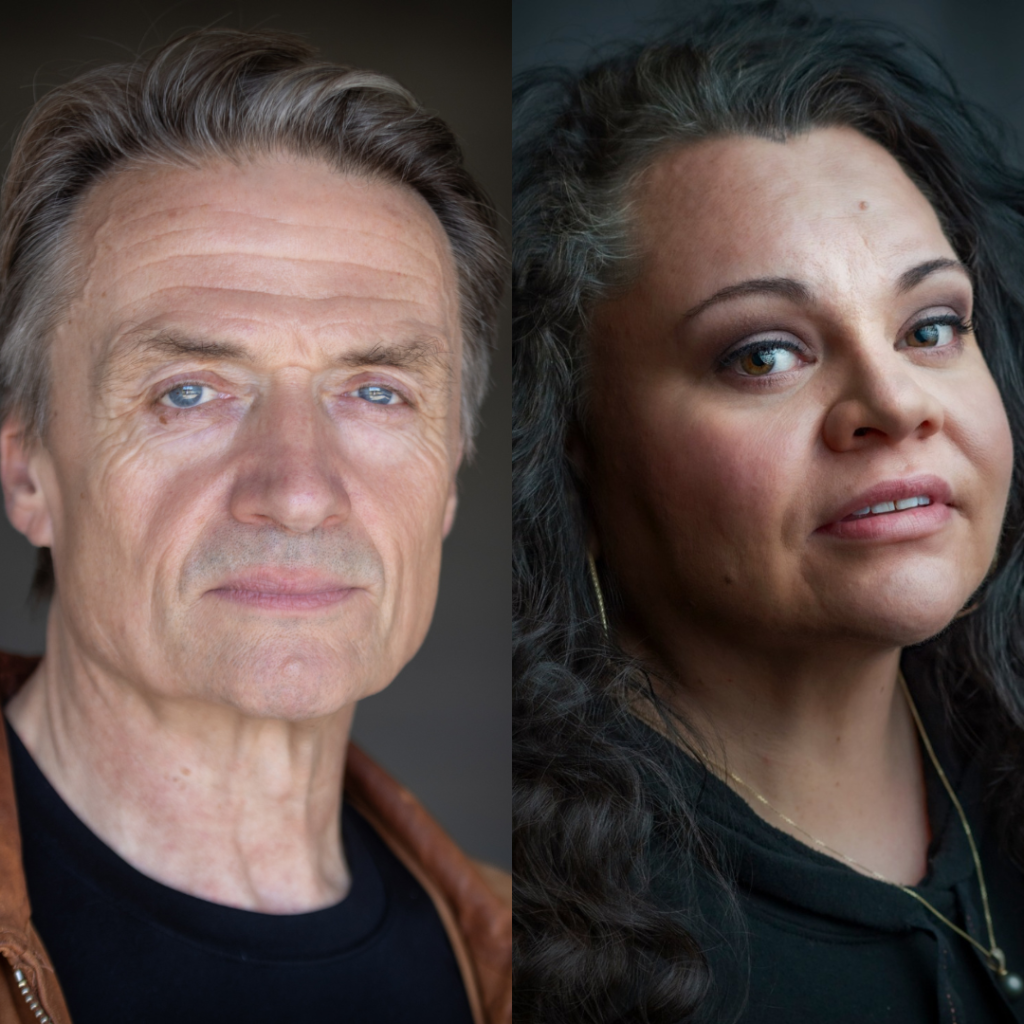
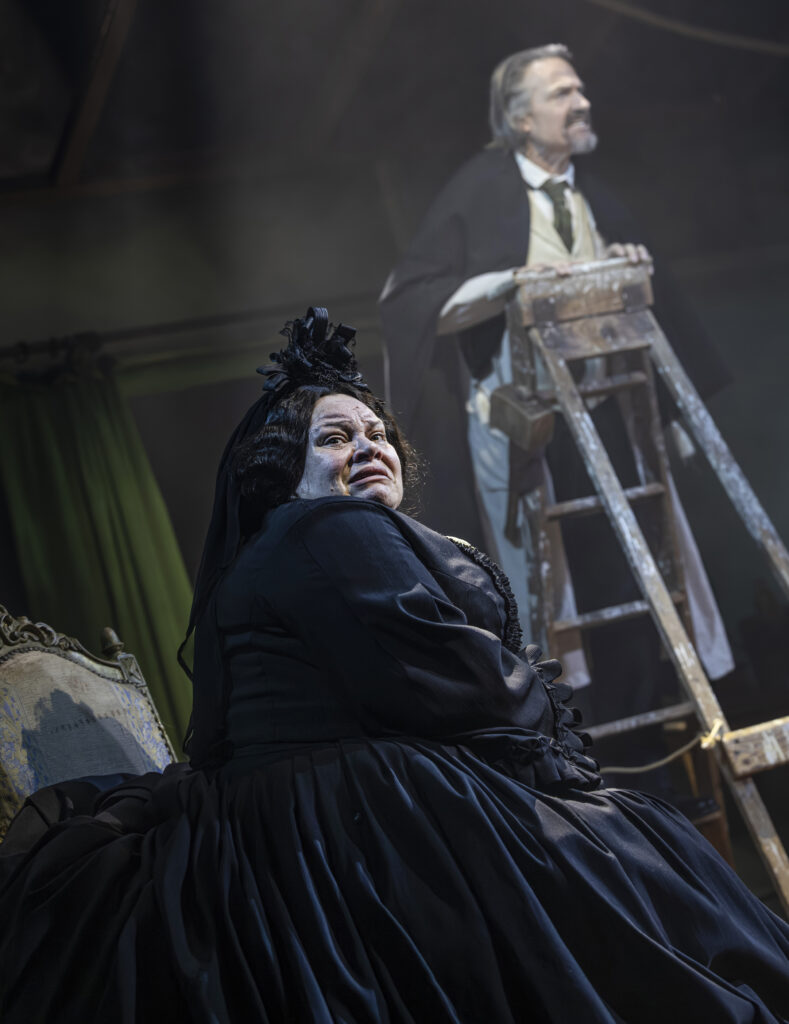
Spend five minutes in the company of Keala Settle and Hal Fowler and one thing becomes immediately apparent: this is not a typical actor interview.
The pair frequently finish each other’s sentences, dissolve into laughter without warning and move effortlessly between discussions of theatre, history, grief, politics, friendship and philosophy. Although our conversation begins with their work in Mrs. President, a play inspired by the life of Mary Todd Lincoln, it quickly becomes clear that neither performer is particularly interested in discussing a production in isolation. Instead, they are fascinated by the bigger questions that great theatre provokes.
What do we do with grief? Who gets to tell our story? How much of our identity belongs to us, and how much is shaped by other people’s perceptions? Why do some relationships sustain us while others diminish us? And in an increasingly distracted world, why does gathering together in a theatre still matter?
Throughout our conversation, Keala and Hal return repeatedly to the same idea: that theatre remains one of the few places where people can genuinely encounter themselves through the experiences of others. Their discussion ranges from Mary Todd Lincoln’s tragic life to modern social media culture, from artistic collaboration to personal resilience. Yet beneath it all runs a shared belief in curiosity, compassion and connection.
It is, fittingly, a conversation about humanity.
The Stories That Find Us
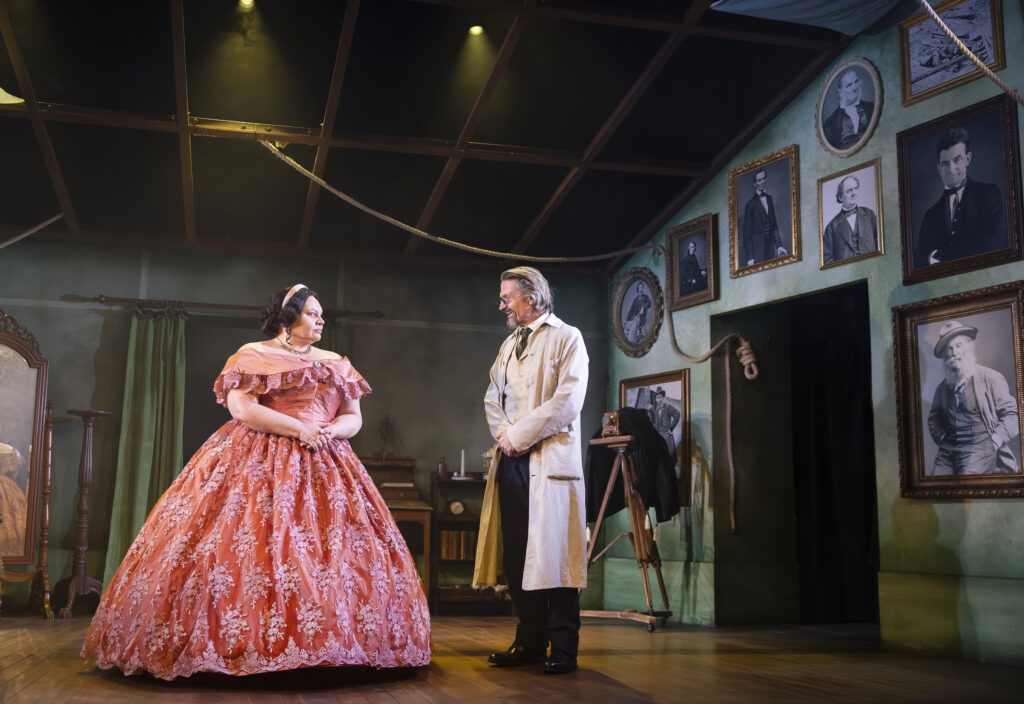
Actors are often asked why they choose certain roles, but listening to Keala describe her connection to Mary Todd Lincoln, it becomes clear that she sees the relationship the other way around. Some stories choose us.
On paper, there appears to be little common ground between the performer and the former First Lady of the United States. Keala is quick to acknowledge that she has never experienced many of the specific tragedies that defined Lincoln’s life. Yet something in the character spoke to her immediately.
“It was beyond the fact that it was her,” Keala explains. “I am no wife to an assassinated president at all. I don’t have four children. Three of them are not dead.”
What resonated was something deeper and more universal.
Born and raised in the South Pacific, with a New Zealand mother and a father from the north of England, Keala has spent much of her life navigating different cultures, expectations and experiences. Reading the script, she recognised something familiar in Mary Todd Lincoln’s resilience and complexity. “It was just understanding what it’s like to live as a woman with grief, I suppose.”
For Keala, the role is not about historical accuracy alone. It is about recognising the emotional truth beneath the historical detail. The circumstances may differ, but the human experience remains familiar.
Hal shares a similar perspective. What interests him is not simply who Mary Todd Lincoln was, but what her story reveals about the ways people are remembered. “The idea of once you tell the story, does it belong to you anymore?” he asks. “And someone then wants to change the story and make it into their story.”
It is a question that extends far beyond history books.
Every life, they suggest, becomes subject to interpretation. Every individual is remembered through the lenses of those who observe them. Theatre, at its best, invites audiences to interrogate those assumptions rather than accept them.
Grief Has No Time Period
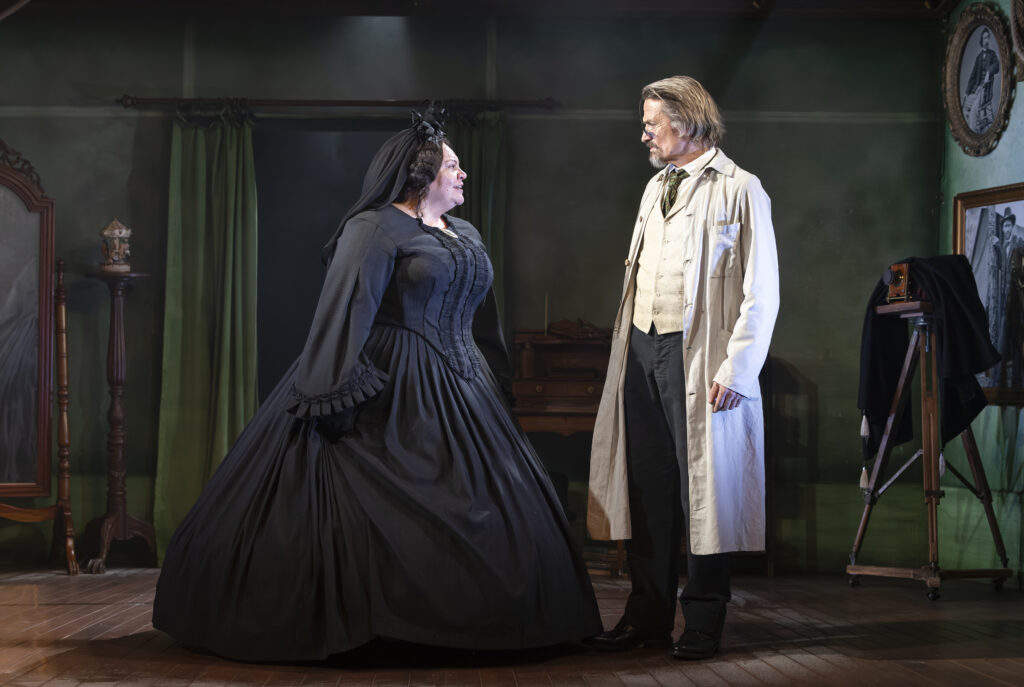
Although the conversation frequently returns to history, neither performer views the play as a history lesson. Instead, they see it as an examination of grief.
Keala speaks passionately about the extraordinary losses Mary Todd Lincoln endured. The deaths of three children. The assassination of her husband as she sat beside him. Her subsequent isolation and public condemnation. “How did you survive that?” she asks. “She did survive.”
What fascinates both performers is how differently such experiences were understood in the nineteenth century. “There was no language for mental health,” Keala says. “There was no language for shock and grief.”
The discussion becomes increasingly animated as they reflect on how quickly society labelled women who struggled with trauma. Mary Todd Lincoln was frequently dismissed as unstable, irrational or hysterical. Yet viewed through a modern lens, her behaviour appears less like madness and more like profound, unresolved grief.
Hal points out that many of the circumstances surrounding her life remain astonishing even today. After Abraham Lincoln’s assassination, Mary was reportedly removed from the room because her grief was deemed too disruptive. “Too hysterical,” Keala says. “So she wasn’t even there.”
The conversation moves beyond Mary herself and towards a broader reflection on how societies respond to suffering. What happens when grief is misunderstood? What happens when there is no support system? What happens when someone is expected simply to carry on?
For Keala, these questions remain painfully relevant. “It doesn’t matter who it was,” she says. “It was a woman who went through all of these things and had no one.” The details may belong to history, but the emotional experience remains familiar.
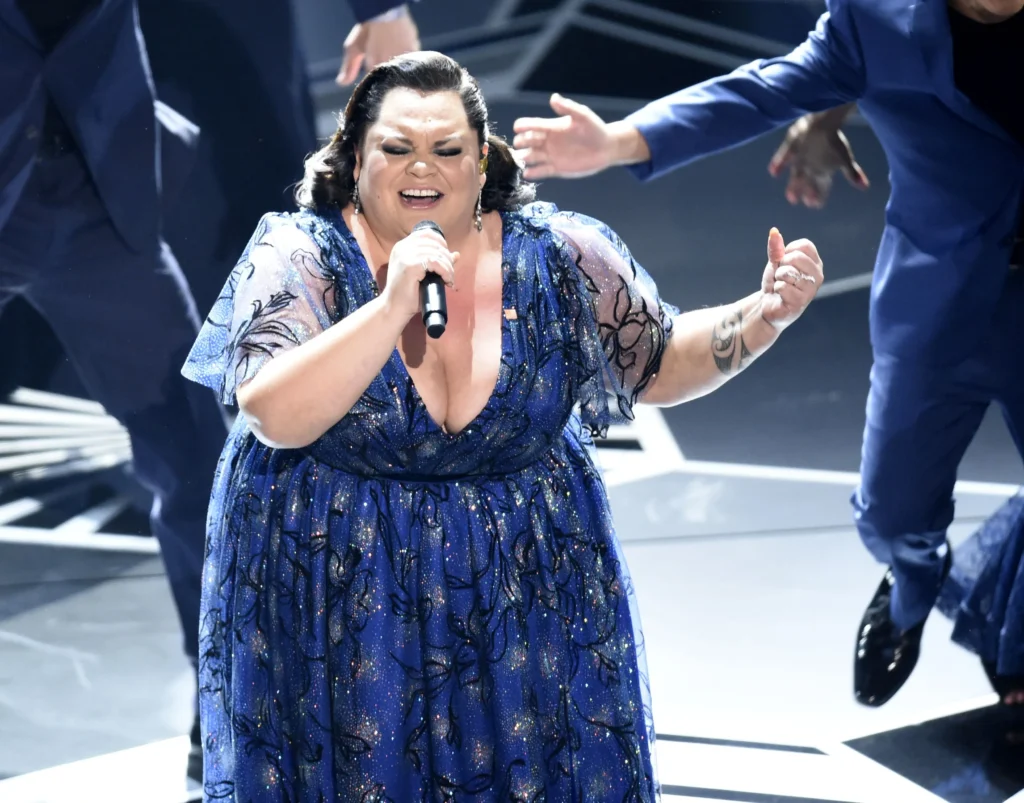
The People Who Carry Us
Perhaps the most moving aspect of the conversation is the affection the two performers clearly have for one another. Again and again, Keala returns to the importance of trust.
The emotional demands of the role, she admits, have been considerable. There were moments during rehearsals when she doubted herself, questioned whether she could meet the challenge and worried about where the process might take her emotionally. “There were so many times I cried because I was like, I don’t want to do this.”
During those moments, Hal became an anchor. “I needed that support system, not just as the character of Matthew Brady, but also Hal just being who he is.” She describes him not simply as a colleague but as a friend. “There were times when I was like, I feel like I’m going crazy just doing this. And he would see it before I could even say anything.” Hal is equally generous in his description of their partnership. He compares their work together to a constantly evolving dance.
At the start of each performance, he explains, both actors are effectively holding the same ball of energy. Eventually one of them takes control, but exactly when that happens varies from night to night. “Only one of them can have the ball. And that has to be decided by us on the night.” The result is a performance that remains alive and responsive rather than fixed.
Neither actor knows precisely where the emotional emphasis will fall on any given evening. Instead, they respond to one another in real time. Listening to them describe the process, it becomes clear that trust is not merely helpful. It is essential. “It becomes beyond a pas de deux,” Keala says. “It just becomes this mix of egos and eccentricities.” Their friendship becomes part of the storytelling itself.
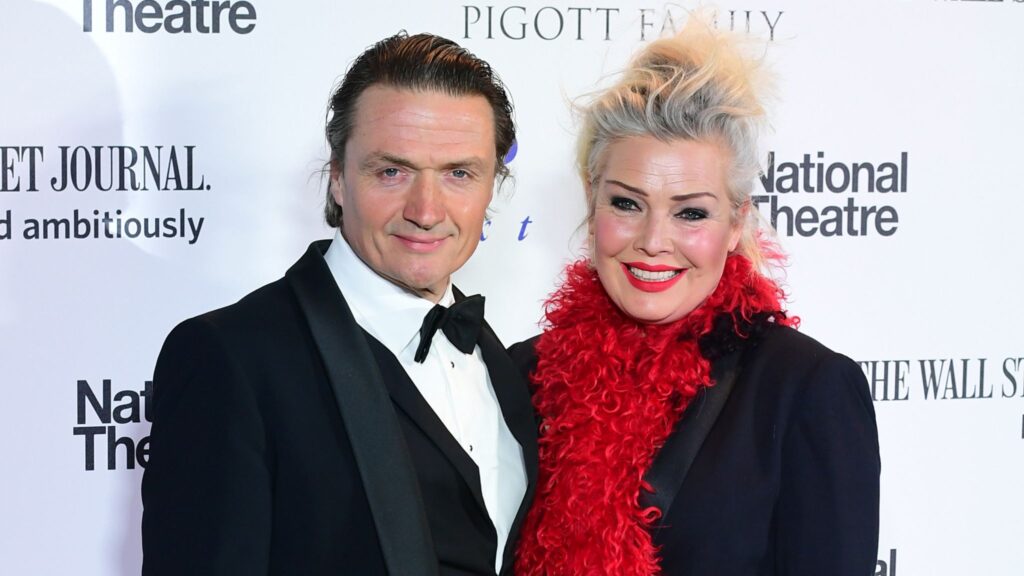
Who Gets To Tell The Story?
One of the richest parts of our discussion centres on identity and the stories people tell about themselves. Hal is particularly thoughtful on the subject. “We’re all the product of what other people tell us what we are.” From childhood onwards, he argues, individuals are surrounded by labels. Some are helpful. Others become limiting. Over time, many people mistake those labels for their authentic selves. “We attach our thoughts and feelings and beliefs to all those things.”
Theatre offers a unique opportunity to challenge those narratives. For Hal, the power of storytelling lies not in providing answers but in encouraging curiosity.
Historical figures are especially revealing because every generation reinvents them. The way a person is understood fifty years after their death may be entirely different from how they were perceived while alive. That process is not limited to famous figures. It happens to all of us. “We create ourselves,” Hal says.
The observation resonates strongly with Keala, who repeatedly returns to the idea that people are often far more similar than they realise. “As much as we’re all individuals, we actually are all the same. We’re trying to get through it.” Beneath political differences, social divisions and personal histories lies a common desire to be understood. That, they suggest, is why stories matter.
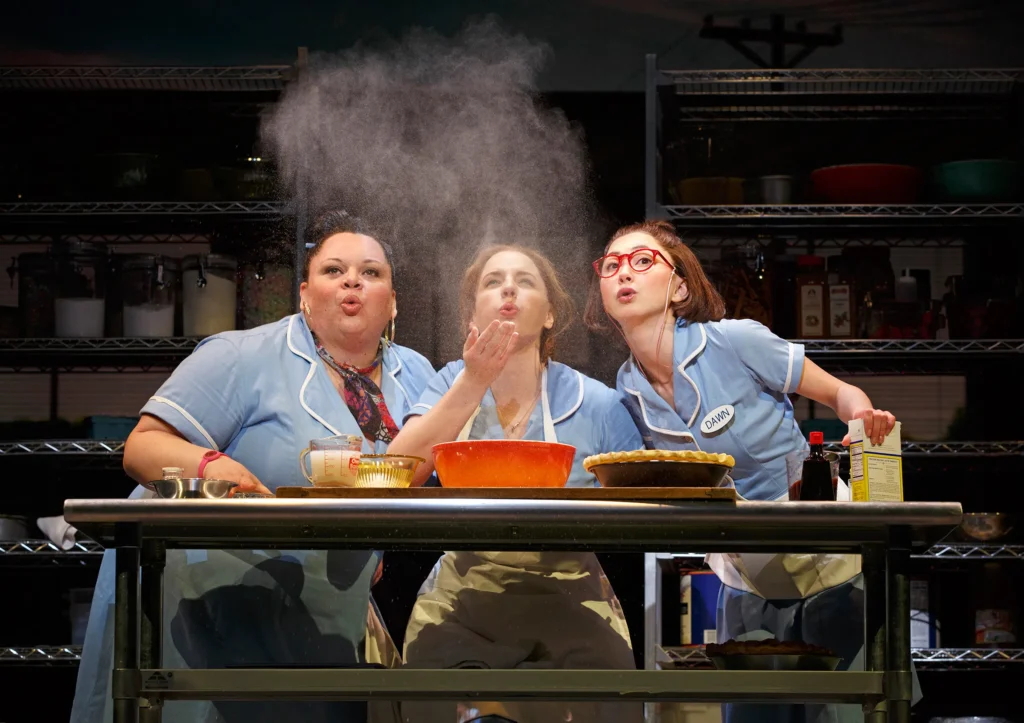
Why Theatre Still Matters
As the conversation turns towards the future, both performers become increasingly passionate about the role of live performance in contemporary life. Keala points towards the phones, recording devices and screens that surround modern existence. “We’re forgetting.” She is not condemning technology. Rather, she worries that people are losing touch with something essential. Human connection.
For Hal, theatre remains one of the few places where audiences willingly surrender their attention. “You are part of the show whether you like it or not.” Unlike a streaming service or social media feed, live performance demands presence. Audiences cannot pause it. They cannot skip ahead. They cannot divide their attention between multiple screens.
Instead, they sit together and share an experience. Both performers see this as increasingly valuable. Keala speaks warmly about the audiences who attend the show and the way each group changes the performance. Some nights are vocal and responsive. Others sit in near silence. Every reaction influences the energy in the room. “It really never is the same.” That unpredictability, she believes, is one of theatre’s greatest strengths. It reminds us that we are not alone.
Choosing Hope
Despite discussing grief, trauma and misunderstanding for much of our conversation, neither performer leaves the audience in despair. Quite the opposite. Again and again, they return to hope. Not naïve optimism, but hope grounded in experience. Hope built on friendship. Hope built on curiosity. Hope built on the belief that people can continue to learn from one another. “There are glimpses of hope all around the world,” Keala says.
She is under no illusion that change is easy. Both individually and collectively, growth requires effort. It requires honesty. It requires confronting uncomfortable truths. Yet she remains convinced that a different future is possible. “We don’t have to be this way.” It is a sentiment that feels particularly powerful coming from two performers who spend their lives exploring human complexity.
Theatre, they suggest, cannot solve society’s problems. But it can encourage people to look at themselves differently. It can remind audiences that everyone carries unseen burdens. It can foster empathy. And perhaps most importantly, it can encourage curiosity. As Hal observes, the moment people stop being curious about one another is often the moment they stop understanding one another.
By the end of our conversation, that may be the lasting message. Not one about history, politics or even theatre itself, but about the importance of remaining open to each other.
In a world that increasingly encourages certainty, Keala and Hal make a compelling case for curiosity instead.
Based on the Theatre Audience Podcast interview with Keala Settle & Hal Fowler. Listen to the episode →