
Thirty years is a long time to spend doing anything.
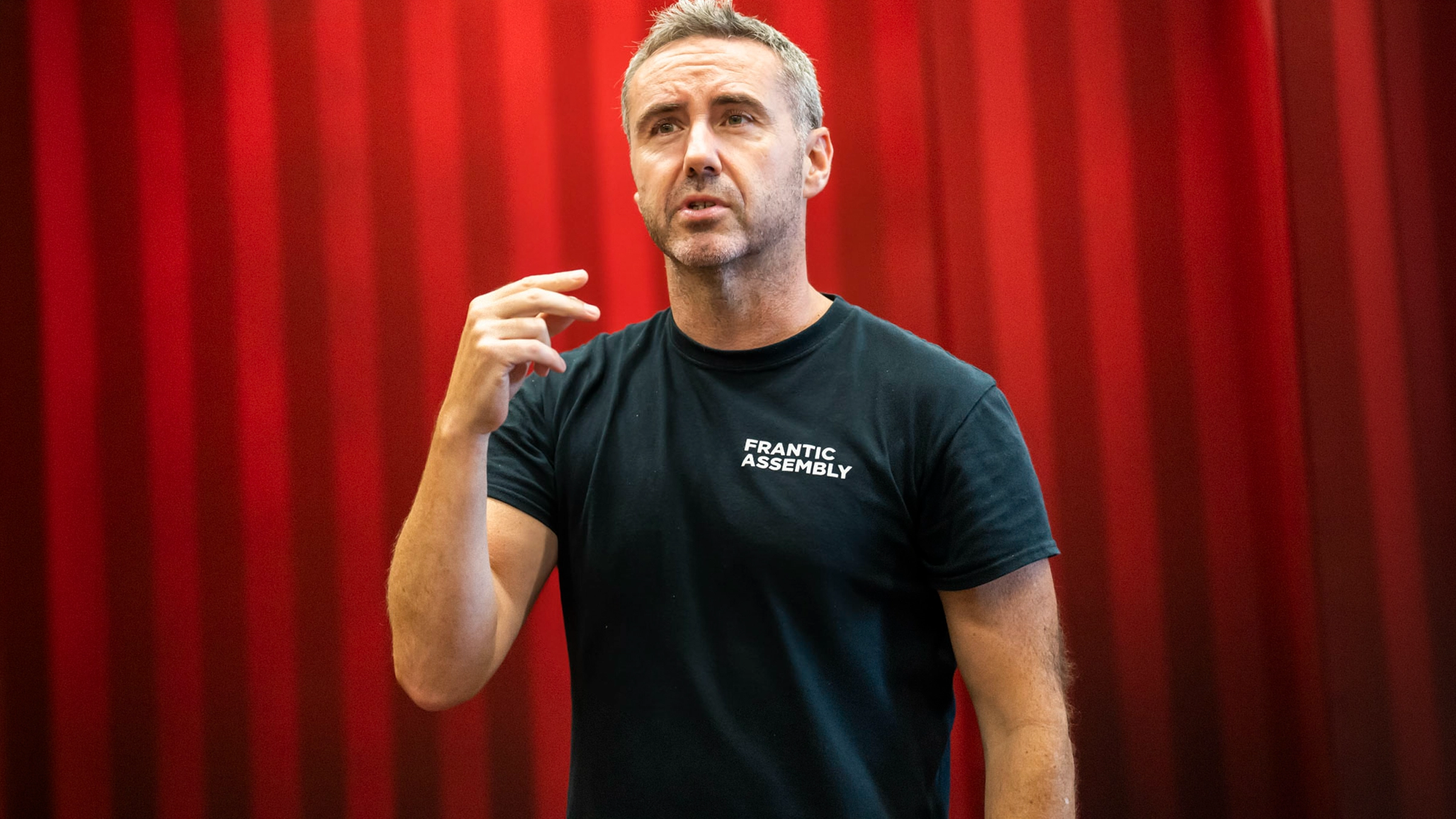
For Scott Graham, co-founder and artistic director of Frantic Assembly, it has been three decades of making theatre, challenging expectations and continually searching for new ways to tell stories. Since its formation in Swansea in 1994, Frantic Assembly has become one of the most influential theatre companies in Britain, known for productions that combine movement, emotion and storytelling in ways that have inspired generations of performers, directors and educators.
Yet speaking to Scott, what becomes immediately apparent is that he is far less interested in looking backwards than he is in remaining curious about what comes next.
Throughout our conversation, he returns repeatedly to the same ideas: learning, discovery, collaboration and the importance of staying open. Whether discussing Frantic Assembly’s beginnings, the role theatre plays in education, the challenges of sustaining creativity or the company’s new production Lost Atoms, Scott speaks less like someone celebrating a legacy and more like an artist still searching for the next question.
Perhaps that is why Frantic Assembly has endured. Rather than treating success as a destination, Scott seems to view it as permission to keep exploring.
Starting Without A Map
When Frantic Assembly was founded in Swansea in 1994, Scott had no grand masterplan. “The first ambition was to make a show, just try and make some work.” The company began as a group of university friends who wanted to create something together. Looking back, Scott describes himself as naïve, unsure of what lay ahead and unable to see the bigger picture. “I couldn’t really see the bigger picture. Didn’t really have a huge ambition.”
What they did have was a willingness to learn.
Meeting fellow founders Steven Hoggett and Vicki Middleton through Swansea University’s drama society, Scott found himself drawn into a world that felt entirely new. Coming from a background in football and sport, theatre had initially felt like a guilty secret. “My background was football and sports, so I was doing that. So the idea of doing any drama was a bit of a guilty secret.”
The encounter with physical theatre company Volcano Theatre changed everything. “We just wanted to devour it, but knowing we knew nothing. That’s a really good place to start actually, admitting you know nothing.”
That attitude would become a defining characteristic of both Scott and the company he helped create. Rather than presenting themselves as experts, they embraced experimentation. Their first productions were attempts to find a voice, to discover what made them different and to understand what theatre could be.
What emerged was not simply a style but a philosophy. A belief that creativity begins with curiosity.

The Power Of Sharing What You Learn
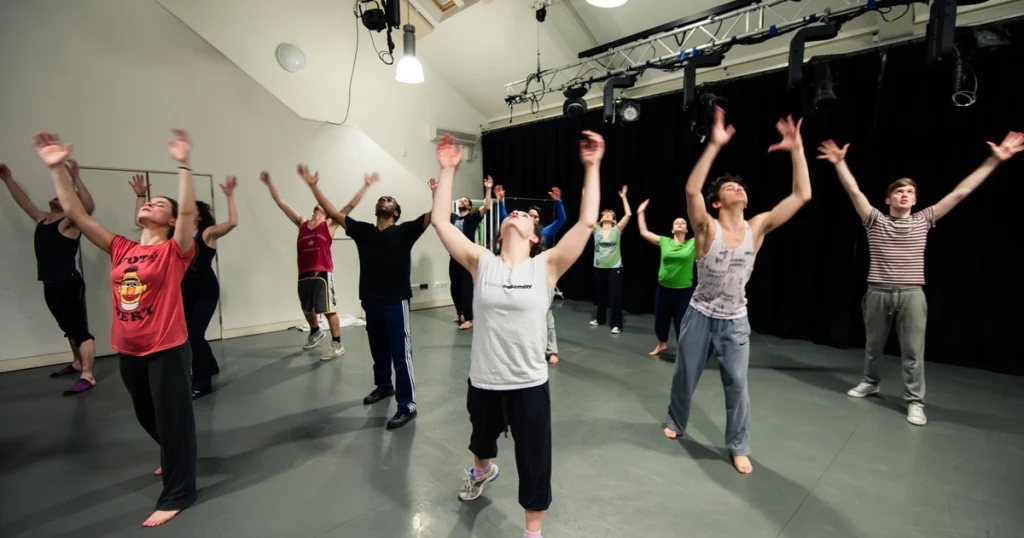
One of the most striking aspects of Frantic Assembly’s story is that education was never an afterthought. In fact, Scott suggests it became central almost immediately. “As soon as we learned something, we shared it.” While many companies focus first on building audiences, Frantic Assembly built relationships. Workshops in schools, colleges and communities became an extension of the company’s creative practice.
The impact was profound. “Our outreach work, our work in schools and colleges and with teachers actually created an audience for us.” It is a fascinating inversion of the traditional model. Rather than asking people to come to the theatre, Frantic Assembly took theatre to them.
Looking back, Scott sees this as more than audience development. It was about empowerment. “We’d been shown generosity and encouragement early on. We thought we had to pass that on.” This commitment continues to shape how he thinks about theatre’s role in society. During our conversation, he becomes particularly animated when discussing drama education and the misconceptions that surround it.
Too often, he argues, creative work is dismissed as simply “putting on a play”. “Theatre, industry and education doesn’t do a good enough job at actually telling the rest of the world what happens in those rooms.” What happens in those rooms, he believes, is far more important. Imagination. Collaboration. Problem solving. Trust. “The skills are what’s needed for a successful society. That’s what’s needed for innovators and imaginations and entrepreneurs.” It is a passionate defence of creativity, but also a reminder that theatre’s value extends far beyond the stage.
Remaining A Sponge
Many artists speak about lifelong learning. Few seem to embody it quite as completely as Scott. One of the recurring themes throughout our conversation is the importance of remaining open, regardless of experience. “I don’t think you ever stop being a sponge.”
Despite leading one of the country’s most respected theatre companies, Scott still approaches rehearsal rooms as places of discovery rather than demonstration. “I realised that fundamentally I go into a rehearsal room to find out what I don’t know rather than to prove what I do know.” It is a philosophy that feels increasingly rare in a culture often obsessed with expertise and certainty.
For Scott, certainty can be dangerous. Creative work thrives on surprise. The best ideas often emerge unexpectedly. The strongest collaborations happen when people are willing to listen. That openness extends to failure too.
Throughout his career, he has continually sought experiences that challenge him. Not every experiment succeeds. Not every production lands in exactly the way he hopes.
But he sees value in that discomfort. “Be prepared to fail. Enjoy failing. Enjoy hitting the ground and getting back up again.” Rather than viewing mistakes as setbacks, he treats them as part of the process. The goal is not perfection. The goal is discovery.
Falling Out Of Love To Fall Back In Love
One of the most revealing moments in our conversation comes when Scott reflects on recent productions and the creative restlessness that accompanied them. Artists are often expected to present unwavering confidence in their work. Scott offers something more honest. He talks openly about reaching a point where he felt he needed to find new creative sparks. “I think I had to find out what I was missing.”
This led him to collaborate with writers from outside traditional theatre backgrounds, including television writer Sally Abbott on I Think We Are Alone and poet Lemn Sissay on Metamorphosis. The experiences were valuable but also challenging. What he eventually discovered was not necessarily what he wanted to move towards, but what he missed. “It felt really great to come back to something having felt like I’d fallen out of love with it.”
The admission feels refreshingly candid. Creative longevity, Scott suggests, is not about endlessly repeating successful formulas. It is about questioning them. Testing them. Occasionally stepping away from them altogether. Only then can you understand what truly matters.
Love, Memory And The Stories We Tell Ourselves
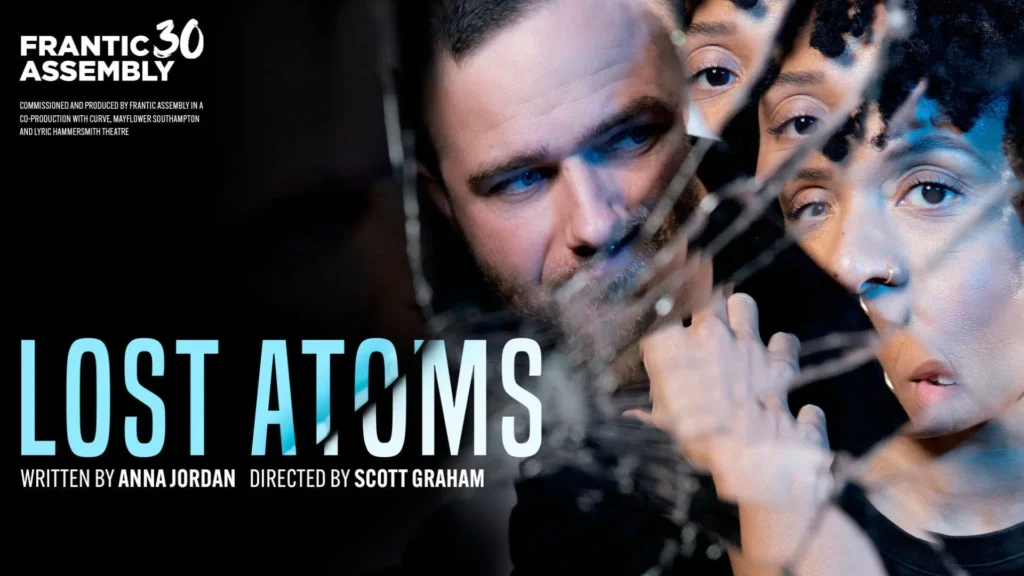
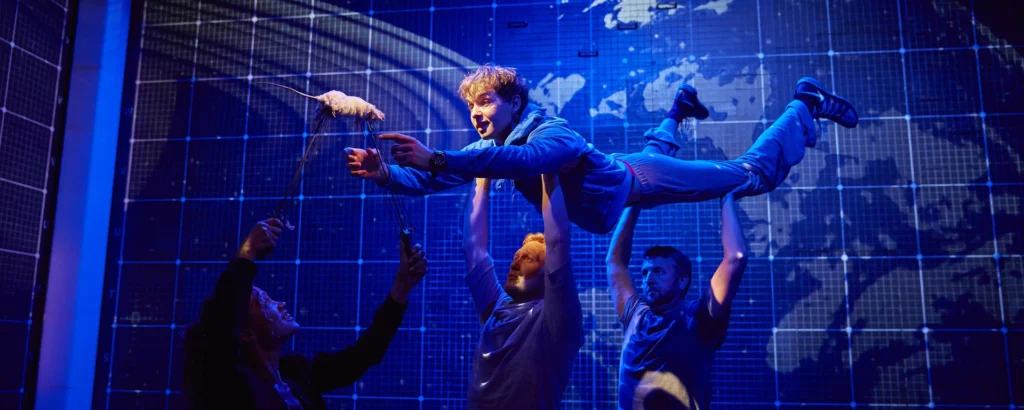
That journey has, in many ways, led to Lost Atoms, Frantic Assembly’s new production and one of the centrepieces of its thirtieth anniversary year. For Scott, however, the play is not simply a new work. It is the continuation of a conversation he has been having for years. “I see it as the third part of a trilogy. An informal trilogy which is Stockholm, Love Song and now Lost Atoms.” The connection between those productions is love. Not romantic idealism, but the complicated reality of relationships and the ways they shape us.
The inspiration for Lost Atoms began years ago while Scott was reading Alain de Botton’s Essays in Love. Yet it took a collaboration with playwright Anna Jordan to uncover the theatrical possibilities hidden within the idea. What fascinated them was memory. More specifically, the unreliability of memory. “The memories that they share aren’t the same. Will never be the same.”
As the play developed, questions emerged. How much of memory is reconstruction? How much is shaped by perspective? How often do we edit our own histories without realising it? “When you remember something, you recreate that memory.” These ideas sit at the heart of Lost Atoms, a story about a couple looking back over their relationship in an attempt to understand what happened between them. Yet Scott is keen to stress that it is not a story about failure.
Relationships end. That does not mean they were unsuccessful. “We made each other. We’re not together anymore, but go forward. Be who you are.” It is a perspective that feels both mature and hopeful. The people we love change us. The relationships may end. The impact remains.
Why Physical Storytelling Still Matters
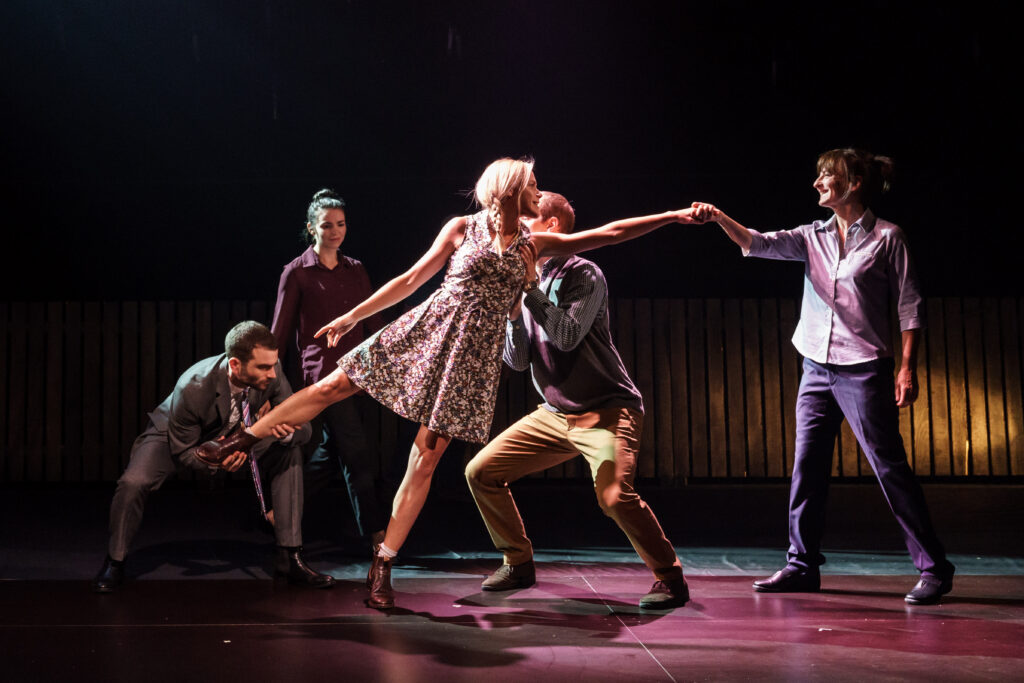
For audiences, Frantic Assembly’s name is often synonymous with movement. Yet Scott is careful not to treat physicality as an end in itself. Movement must always serve the story. “The movement has to respond to the text.” This relationship between physicality and storytelling remains central to the company’s work.
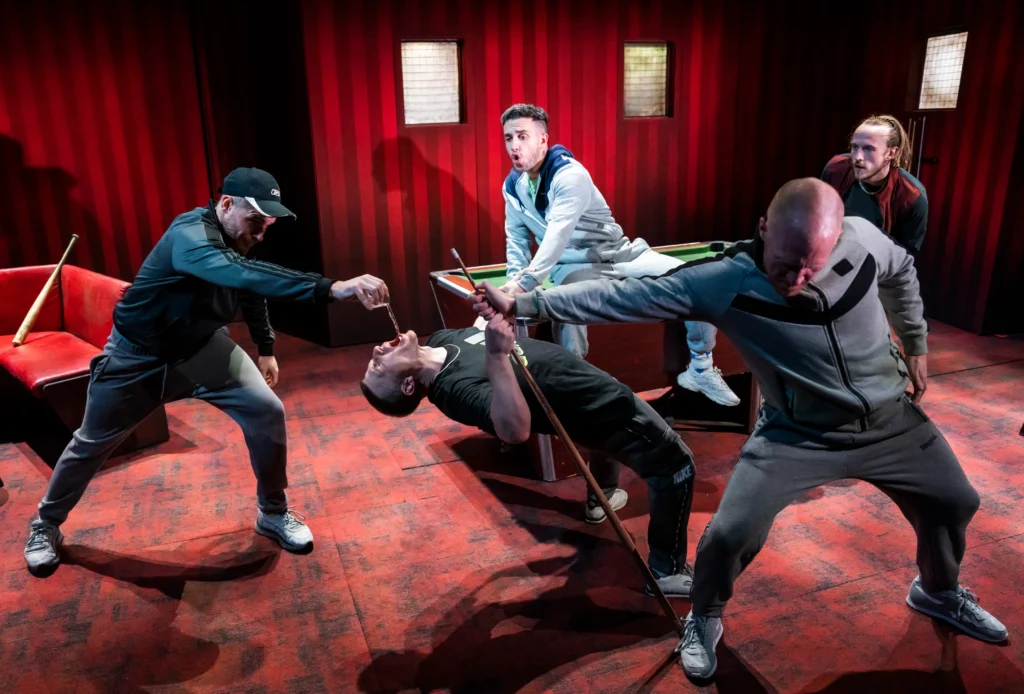
When discussing productions such as Beautiful Burnout, Scott speaks not about choreography but about meaning. The boxing world explored in that production fascinated him because of its contradictions. Its brutality and tenderness. Its violence and intimacy. “The world itself is beautiful.” What interested him was not simply boxing as a sport, but boxing as a community. A place where people support one another. Learn from one another. Depend upon one another.
That same fascination with human behaviour continues to drive Frantic Assembly’s work today. The physical language may evolve. The stories may change. But the underlying question remains remarkably consistent. How do we understand one another?

Looking Forward
As our conversation draws to a close, Scott turns his attention towards students encountering Frantic Assembly for the first time. His advice is simple. Don’t try to imitate. “I think there can be a tendency to try to make something look like Frantic Assembly.”
For him, the company’s methods are tools rather than templates. They exist to help people discover their own voice, not reproduce someone else’s. That philosophy feels like an apt summary of Frantic Assembly itself.
Thirty years on, Scott remains suspicious of certainty, wary of formulas and committed to curiosity. The company may have become one of British theatre’s most recognisable names, but its founding spirit appears unchanged. The desire to learn. The willingness to share. The courage to fail. And the belief that creativity begins not with knowing the answer, but with asking the question.
After three decades, Scott Graham is still asking questions. Perhaps that is precisely why Frantic Assembly continues to matter.
About Frantic Assembly
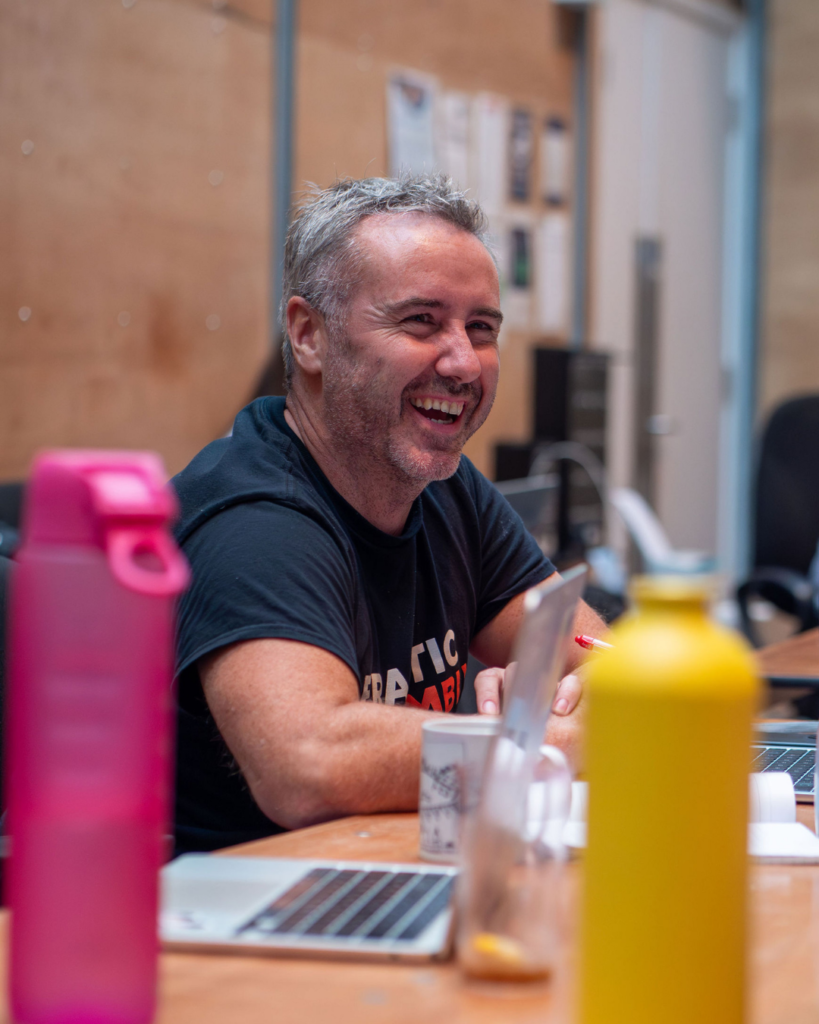
Founded in 1994 by Scott Graham, Steven Hoggett and Vicki Middleton, Frantic Assembly has become one of the UK’s most influential theatre companies, renowned for its distinctive blend of movement, storytelling and collaboration. Alongside its productions, the company delivers extensive education and outreach programmes, working with students, teachers and emerging artists across the UK and internationally.
For more information about Frantic Assembly, its productions, workshops and resources, visit: Frantic Assembly
Based on the Theatre Audience Podcast interview with Scott Graham. Listen to the episode →