
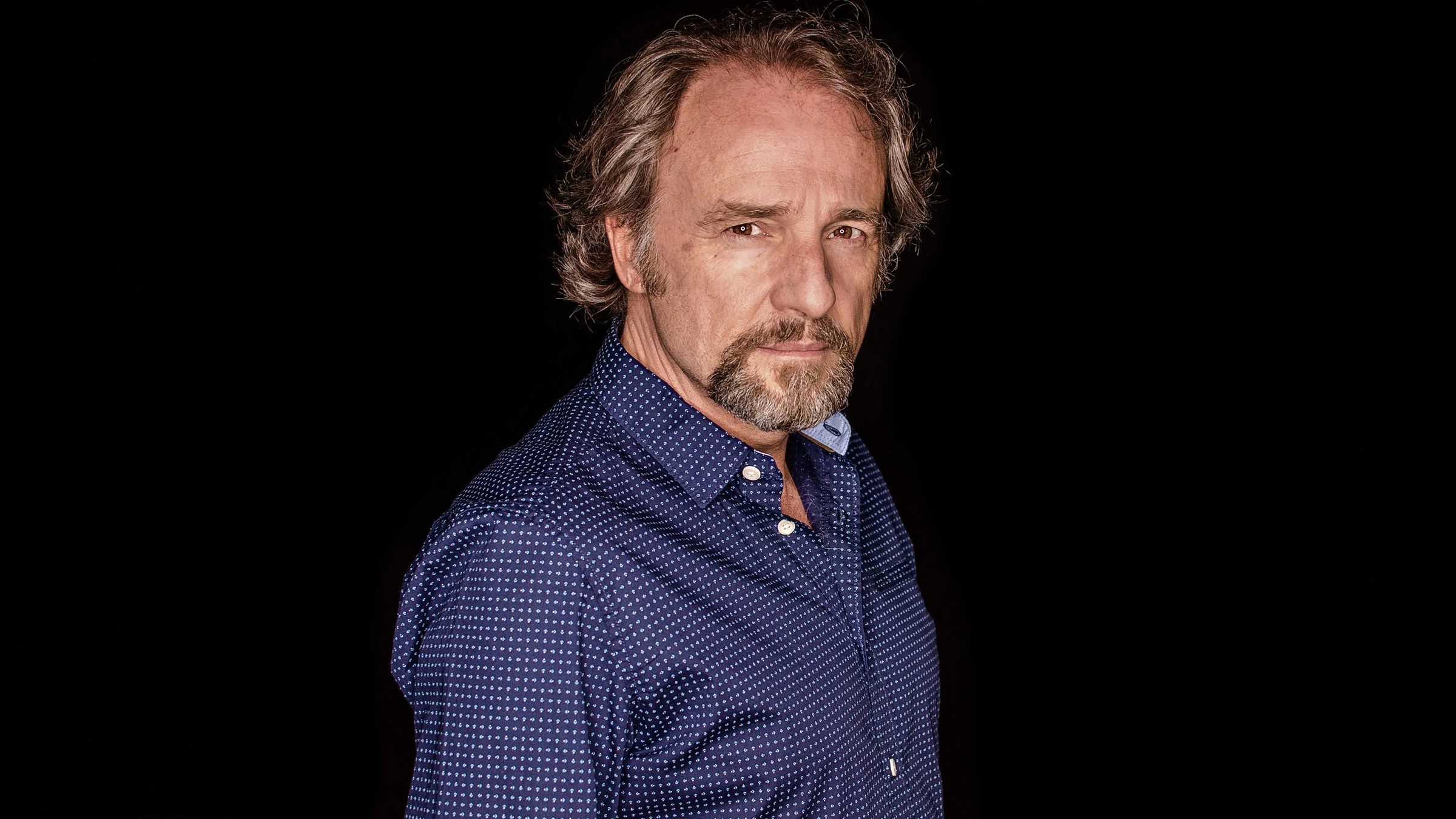
As a founding member of Yllana, one of Spain’s most internationally successful theatre companies, he has spent the last thirty-five years exploring the answer. What began in Madrid in 1991 as an experimental physical theatre collective has grown into a global creative enterprise, touring productions across Europe, Asia, North and South America while expanding into theatre production, events, education and cultural management.
Yet despite that growth, the core of Yllana’s work has remained remarkably consistent. Whether creating physical comedy, musicals, classical music mash-ups or the operatic chaos of Opera Locos, Joseph and his collaborators continue to believe in the power of visual storytelling. Their productions regularly cross linguistic and cultural boundaries, proving that laughter can often communicate more effectively than words.
Speaking with Joseph, it quickly becomes clear that this international success was never part of a grand strategy. Instead, it emerged through curiosity, experimentation and a willingness to trust in the universality of human behaviour. Throughout our conversation, he returns repeatedly to ideas of playfulness, discovery and precision. Comedy, he insists, may look effortless when performed well, but it is built upon extraordinary discipline.
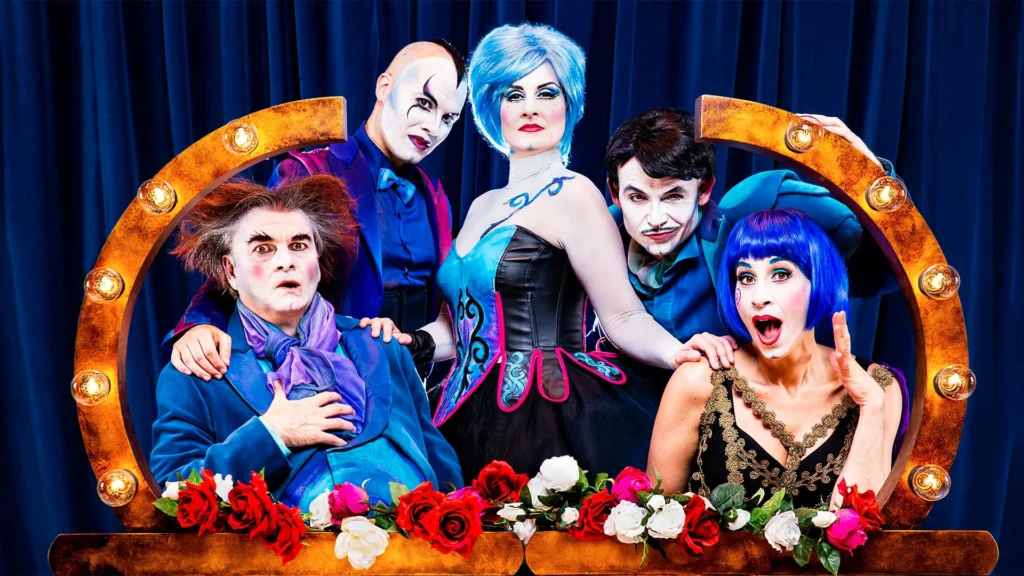
Building A Universal Language
Long before streaming services and global entertainment brands began talking about international audiences, Yllana was quietly discovering that physical comedy could travel almost anywhere.
The company’s earliest productions relied heavily on visual storytelling, mime, movement and physical humour. For Joseph and his fellow founders, this was initially an artistic choice. Over time, however, it became something more significant.
“It was quite amazing how quickly we started touring internationally,” he recalls. “We realised that because we weren’t relying on spoken language, audiences could connect with the work almost immediately.”
That discovery helped shape the company’s future.
Physical comedy, he believes, taps into something fundamentally human. While cultural references and linguistic jokes may vary from country to country, the basic mechanics of physical humour often remain remarkably consistent. “The physicality of human beings, the defects, the mistakes, the errors, the surprises…those things are a great source of comedy and people pick up on them very quickly.”
It is a philosophy that has guided Yllana’s work ever since. Productions are created with audiences in Madrid, Berlin, London, Buenos Aires and Tokyo in mind simultaneously. “When we’re creating scenes, we’re thinking about all of those audiences at once.”
The challenge is not simplifying the work but distilling it. “You have to be very concise. You have to be very precise. You can’t be too ambitious with what you want to say because you don’t have language to explain things.” Instead, the body becomes the storyteller.
For Joseph, that limitation is not restrictive. It is liberating.
Why Entertainment Matters
One of the most striking aspects of our conversation is the conviction with which Joseph talks about entertainment.
He remains passionate about the idea that entertaining audiences is something worth taking seriously. “Entertainment for us is not a dirty word.” In many ways, that simple statement explains both his artistic philosophy and Yllana’s enduring appeal.
In some artistic circles, the word can carry an implication of compromise, suggesting something less substantial than serious drama or experimental work. Joseph rejects that distinction entirely and with the certainty of someone who has spent decades watching audiences respond to carefully crafted comedy.
For Yllana, making people laugh is not the easy option. In many ways, it is one of the hardest things a theatre company can attempt. “You’re locked away in a rehearsal room thinking, okay, this has got to be funny. That’s our objective. That’s what we’re here for.”
The challenge is that comedy provides immediate feedback.
Unlike drama, where audiences may quietly process emotions, comedy demands a visible response. If the joke works, you know. If it doesn’t, you know that too. “You come out on the first night and if it doesn’t work, you go back into the rehearsal room and try to fix it.” There is no hiding.
This relentless pursuit of laughter has shaped the company’s creative process. Every scene is tested against the same question: will it connect with an audience? That doesn’t mean sacrificing artistic ambition. Rather, it means recognising entertainment as a craft that deserves respect.
For Joseph, the distinction between art and entertainment has always felt artificial. The best theatre can do both.

Chaos Before Precision
If Yllana’s productions appear tightly choreographed and meticulously constructed, that is largely because they begin in the opposite state.
Chaos.
One of the most fascinating sections of our conversation concerns the company’s rehearsal process, particularly when developing new work. At the beginning, Joseph actively encourages disorder. “We kind of let chaos take over.” Ideas are thrown around freely. Performers experiment. Improvisations spiral in unexpected directions. Nothing is dismissed too quickly.
That openness serves an important purpose. “We’re looking for surprise. We’re looking for discovery.” The company understands that comedy often emerges from unexpected places. The moment that ultimately becomes the centrepiece of a production may arrive through accident rather than planning.
Once those discoveries have been made, however, the process changes dramatically. “Then we have to rein it all in.” What follows is a period of refinement, repetition and precision.
A gesture may be rehearsed countless times. Timing becomes crucial. Every movement is scrutinised. “It could take hours just working on one gesture, one movement, one piece of timing.” The result is a fascinating contradiction. The comedy feels spontaneous. The craft behind it is anything but.
Finding The Clown Within
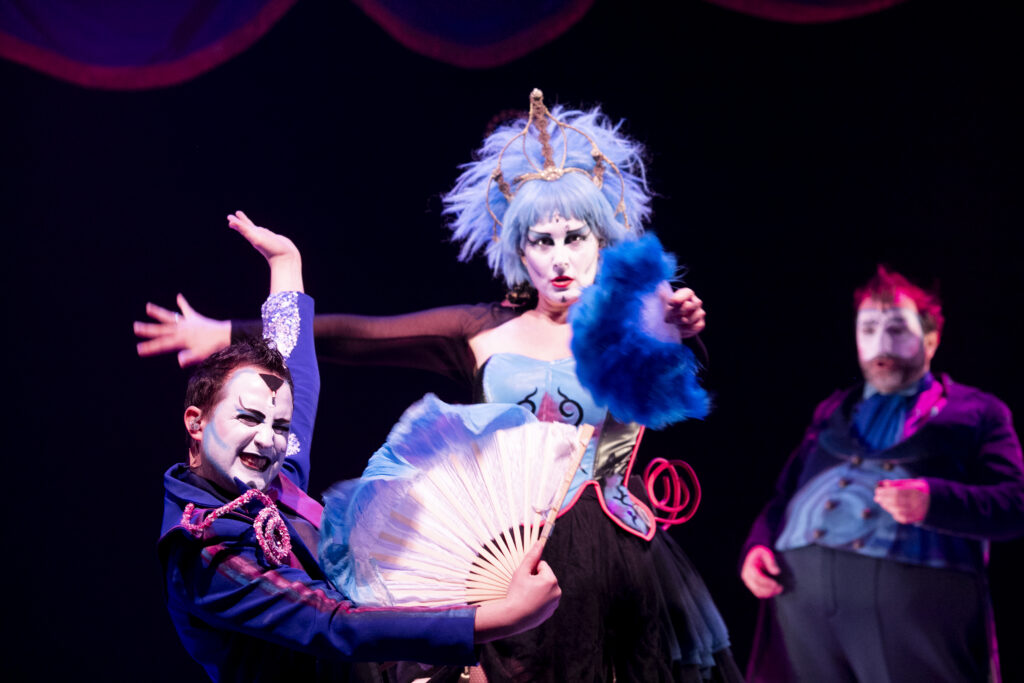
Perhaps the most revealing insight into Joseph’s creative philosophy comes when he discusses working with performers. Whether auditioning opera singers, musicians or actors, he is less interested in imposing a character than uncovering something that already exists. “What we try to do is find the clown that each performer has inside.”
It is an idea rooted in the traditions of physical theatre and clowning, yet Joseph describes it in deeply personal terms. “We don’t try to impose a character. We try to evolve a character.”
This approach proved particularly important during the creation of Opera Locos. The company auditioned hundreds of opera singers before narrowing the field and inviting selected performers to participate in intensive workshops. Technical excellence alone was not enough.
The singers needed to discover a different side of themselves. “They come from a world that can sometimes be quite rigid. Suddenly they were being encouraged to play, to explore and to express themselves in completely different ways.” The process, he says, often becomes transformative. “We spend weeks working with each individual performer and helping that clown emerge.”
The language of clowning can sometimes be misunderstood as childish or simplistic. Joseph views it differently. “The clown represents vulnerability. Imperfection. Humanity. And, ultimately, connection.”
A VHS Tape And A Turning Point
Every long career contains a handful of moments that change everything. For Joseph, one of those moments arrived in Edinburgh in the early 1990s. At the time, Yllana was still a young company. During a visit to the city, he happened to have a VHS recording of one of their productions with him.
Through a chance encounter, he found himself standing outside the Traverse Theatre. “I knocked on the door and handed over a VHS tape of a Spanish company doing a parody of bullfighting.” There was no grand pitch. No elaborate presentation. No expectation that anything would come of it.
A month later, the phone rang. The company had been invited to perform at the Edinburgh Festival. “We were jumping with joy.”
Looking back, the story feels almost impossible in its simplicity. Yet it also captures something essential about Yllana’s journey. Opportunity often arrived through curiosity, persistence and a willingness to take chances.
That invitation helped establish an international relationship that continues to this day. The company has since performed repeatedly in the UK, including appearances at the Edinburgh Festival Fringe, the Peacock Theatre and Sadler’s Wells.
For Joseph, international touring remains one of the great joys of the profession. “We get to travel, meet other artists, see other work and learn from it.” The world becomes both audience and classroom.
Addicted To Laughter
Towards the end of our conversation, Joseph offers perhaps the most honest description of life in comedy. “You’re kind of addicted to laughter.” The phrase arrives almost casually, yet it perfectly encapsulates the relationship performers develop with audiences.
Laughter is more than approval. It becomes a form of communication. A rhythm. A conversation. “It’s almost like music.”
When a show is working, performers and audience enter into a shared exchange. The actors offer something. The audience responds. The performance adjusts. The response changes. Back and forth. Night after night. “It’s a form of communication.” That relationship remains as exciting now as it was when Yllana first began.
Despite three decades of success, Joseph still talks about audiences with genuine curiosity. What will surprise them? What will delight them? What will make them laugh?
Those questions continue to drive the company forward.
Today, Yllana is developing new projects, including productions combining physical comedy with flamenco and other unexpected theatrical forms. Yet the underlying motivation remains unchanged.
The search continues.
Not for the perfect joke.
Not for the perfect show.
But for that magical moment when an audience collectively lets go and laughs.
After thirty-five years, Joseph O’Curneen still finds that moment irresistible. And perhaps that explains why audiences around the world continue to follow wherever Yllana’s imagination leads next.
Joseph O’Curneen is a founding member and Artistic Director of Yllana, the internationally acclaimed Spanish theatre company established in 1991. Known for its distinctive blend of physical comedy, visual storytelling and international appeal, Yllana has toured extensively across the world and created productions including Opera Locos, Pagagnini, The Gagfather and numerous theatre, music and comedy collaborations.
Based on the Theatre Audience Podcast interview with Joseph O’Curneen. Listen to the episode →